




















KOTA KINABALU: Chief Minister Datuk Seri Panglima Haji Hajiji Haji Noor has urged housing and property developers in Sabah to place sustainable development, well-planned urban growth and housing affordability at the centre of their future projects.
He said these three priorities are essential to keeping Sabah’s property sector resilient, competitive and responsive to the needs of a growing population.
“Developers must adopt designs and construction methods that use resources efficiently, reduce long-term operating costs and respond to Sabah’s environmental needs.
“They must also optimise land use and ensure that new developments are supported by adequate transport networks, utilities and public amenities,” he said.
Hajiji said developers should work closely with the State Government to identify practical solutions that bring homeownership within reach of first-time buyers, young families and middle-income households — while preserving the commercial viability of their projects.
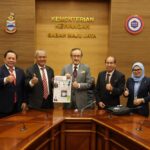
He was speaking at the Sabah Housing and Real Estate Developers Association (SHAREDA) Nite, held at Magellan Sutera Resort here. His speech was delivered on his behalf by Deputy Chief Minister and Finance Minister Datuk Seri Panglima Masidi Manjun.
Hajiji stressed that achieving these priorities demands close cooperation between government and industry, underpinned by constructive dialogue, sound planning and a willingness to adapt to changing circumstances.
“Neither government nor industry can achieve these priorities alone.
“When we work together to create a more predictable development environment, we give investors greater confidence, support local businesses and help more Sabahans share in our state’s progress,” he said.
The Chief Minister said the State Government remains committed to improving the efficiency and transparency of development approval processes, strengthening essential infrastructure and removing regulatory obstacles that hinder project implementation.
Such improvements, however, must never come at the expense of safety, environmental standards or the wider public interest, he cautioned.
He also acknowledged SHAREDA’s industry experience and insights as a valuable contribution towards refining the state’s development framework.
Hajiji said the property sector’s significance to Sabah’s economy extends well beyond the construction of residential and commercial buildings.
Property development, he noted, generates employment across construction, professional services, transportation and financing, while sustaining local contractors, suppliers and businesses.
“Well-planned housing, commercial centres and industrial facilities also help attract investment and enable businesses to expand.
“In this way, a healthy property sector contributes to growth across the wider economy,” he said.
The industry, he added, will remain an important partner in advancing the Sabah Maju Jaya development agenda — particularly in supporting agriculture, industrial development, tourism and infrastructure, all of which depend on suitable land, reliable facilities, quality housing and well-connected communities.
At the same time, Hajiji acknowledged the mounting challenges confronting developers, among them rising construction and financing costs, supply-chain disruptions, and the high cost of transporting building materials into Sabah.
He said lengthy approval procedures, unclear regulatory requirements and infrastructure limitations involving electricity, water supply and road connectivity can further delay projects and undermine their viability.
“These pressures extend beyond individual projects. When development slows, contractors and suppliers receive less work, employment opportunities narrow, and investment may be deferred.
“When costs are passed on to buyers, more families find it difficult to own a home,” he said.
Addressing these challenges, he stressed, is crucial not only to sustaining the property industry but to strengthening Sabah’s economy and improving the quality of life of its people. He reiterated the State Government’s commitment to working with relevant agencies and industry stakeholders on practical, coordinated solutions.
The Chief Minister commended SHAREDA for its sustained engagement with policymakers and industry stakeholders, particularly in offering constructive input on housing development, urban planning and related matters.
He urged the association and its members to uphold the highest standards of integrity, innovation and quality in their projects.
“Let us build not only more properties, but stronger communities and a more resilient economy for future generations,” he said.




Add Comment