
















BEAUFORT:The Sabah Government has allocated RM2.3 million this year to bolster drug prevention efforts through the expansion of the Public Sector TEKAD Programme and the empowerment of the Anti-Drug Squad (SKUAD Antidadah).
Chief Minister Datuk Seri Panglima Haji Hajiji Haji Noor said the allocation was approved at the 2026 Meeting on Action to Combat Drugs (MTMD), complementing the various initiatives undertaken by the National Anti-Drugs Agency (AADK) in Sabah.
He said combating drug abuse remains a priority, as Sabah’s development must be measured not only by economic growth and improved infrastructure, but equally by family wellbeing, community safety and the prospects of its younger generation.
“The drug menace must not be taken lightly. Its consequences extend beyond an individual’s health and wellbeing, threatening family harmony, community safety and the state’s productivity.
“Behind every statistic are individuals and families who need attention, guidance and support to rebuild their lives,” he said.
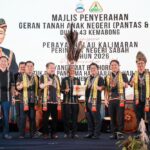
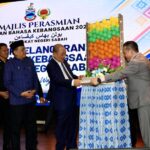
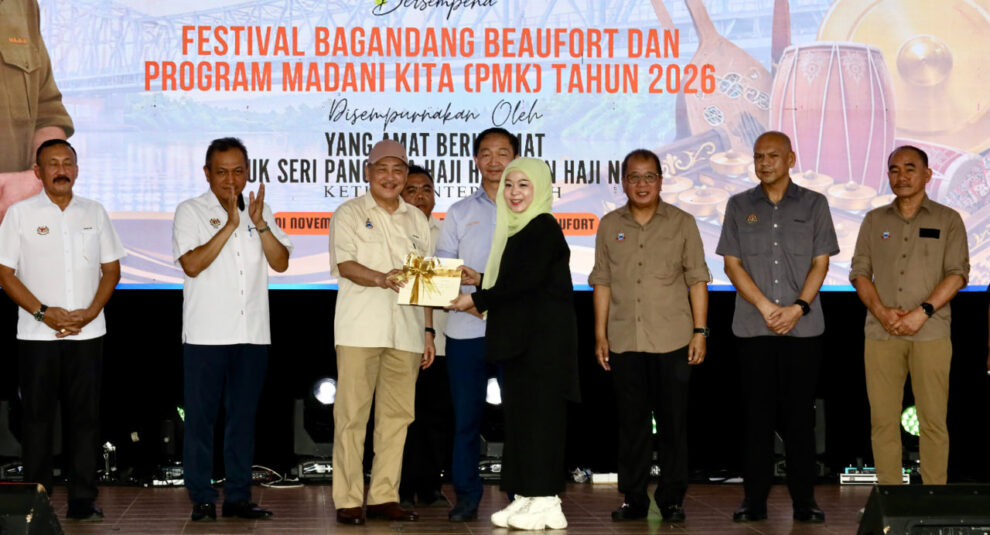
Hajiji was speaking when officiating the MADANI Kita 2026 Programme and the closing ceremony of the Beaufort Bagandang Arts Festival at Dataran Bagandang here.
Citing AADK statistics, he said 130,307 individuals nationwide were recorded as drug addicts and abusers in the first six months of 2026 — a decline of 3.4 per cent from 134,916 in the corresponding period last year.
In Sabah, 5,269 individuals were recorded over the same period, a marginal decrease of 0.02 per cent year-on-year.
Despite the downward trend, Hajiji cautioned against complacency, noting that the drug menace continues to evolve with the emergence of increasingly dangerous substances.
“We cannot afford to be complacent, particularly with the growing threat posed by synthetic drugs such as Amphetamine-Type Stimulants (ATS), New Psychoactive Substances (NPS) and synthetic opioids, including fentanyl,” he said.
He voiced particular concern over drug abuse among those aged between 19 and 39 — an age group he described as a vital driving force behind Sabah’s development. Drug involvement within this cohort, he warned, risks derailing their futures while inflicting lasting harm on their families, communities and the wider economy.
To tackle the problem more effectively, Hajiji outlined three key strategies centred on community prevention, integrated enforcement and rehabilitation.
Strengthening the frontline. The first strategy, he said, is to fortify families and communities as the first line of defence against drug abuse. Parents must take a proactive role in monitoring their children’s social circles, recognising behavioural changes and fostering open communication at home.
Community leaders, youth associations and volunteers, he added, should expand positive activities that build character and shield young people from harmful influences.
Hajiji stressed that prevention programmes must reach rural, interior and island communities, so that geography does not become a barrier to anti-drug education, early intervention and government assistance.
Tightening enforcement. The second strategy involves strengthening enforcement and inter-agency cooperation to disrupt drug trafficking and dismantle criminal syndicates.
He called for closer coordination among AADK, the Royal Malaysia Police (PDRM), the Royal Malaysian Customs Department and other relevant agencies through intelligence sharing, joint operations and targeted enforcement.
Firm action against traffickers and syndicates, he said, must go hand in hand with prevention and early intervention — reducing both supply and demand while heading off new cases.
Restoring lives. The third strategy focuses on widening access to treatment, rehabilitation and employment so that recovering individuals can regain their independence and reintegrate into society.
“We must remain firm against drug trafficking, but at the same time, provide opportunities for those genuinely seeking recovery.
“They should not continue to face stigma that prevents them from returning to their families and communities.
“Instead, they must be guided, given a second chance and supported in becoming productive members of society,” he said.
Hajiji said AADK Sabah has rolled out a range of programmes, including the Drug-Free Aspiration Village Programme (KABD), the FELDA Sejahtera MADANI Community Programme, the Two-Wheeled Anti-Drug Squad Roadshow, the Drug-Free Aspiration Tour (JABD), Moto Day 9.0 and Ops Cegah Khas. Targeted interventions are also under way in identified High-Risk Areas (KBT).
He expressed hope that cooperation between the Federal and State governments, enforcement agencies, AADK and local communities would translate into coordinated, effective action at the grassroots.
Hajiji also congratulated the organising committee for successfully reviving the Beaufort Bagandang Arts Festival, last held in 2016.
The festival’s return, he said, will help preserve and promote the traditional Bagandang arts long associated with Beaufort, while introducing the district’s cultural heritage to a wider audience.
It also serves as a platform to prepare Beaufort for Visit Sabah Year 2027 and to stimulate the local economy through business opportunities for entrepreneurs, including sales stalls and traditional tamu markets.
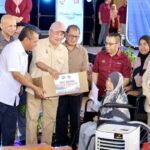
At the event, Hajiji presented 247 land titles covering a total of 889.21 acres to villagers.
Of these, 24 were PANTAS land titles involving 77.51 acres, while the remaining 223 were ordinary Native Title (NT) land titles covering 811.7 acres.



Add Comment